
Understanding and managing patellar tendonitis in Kennesaw
The knee tendon that fails from jumping and stopping.
Patellar tendonitis is the knee tendon that fails from jumping and stopping, causing persistent anterior pain that disrupts your active lifestyle. If you are searching for patellar tendonitis treatment in Kennesaw, start here.
The knee tendon that fails from jumping and stopping
Patellar tendonitis involves micro-tearing and inflammation of the tendon connecting your kneecap to your shinbone. This structure absorbs massive tensile loads when you decelerate, land from a jump, or change directions abruptly. Over time, repetitive overload outpaces the tissue's natural healing capacity, leading to persistent anterior knee pain.
If you are an active adult or former athlete in your forties or fifties, you likely notice this discomfort when descending stairs, squatting, or attempting to return to recreational sports. Ignoring early warning signs allows minor tendinopathy to progress into chronic degeneration, making precise intervention essential for long-term joint health.
Root causes and distinguishing presentation in Kennesaw
Tendon overload rarely happens in isolation. Biomechanical faults up the kinetic chain—such as restricted ankle mobility, hip weakness, or poor core stability—frequently force the knee to absorb excessive stress. At our Kennesaw practice, we look beyond the local pain to identify the primary mechanical drivers behind your injury.
Patellar tendonitis differs from patellofemoral pain syndrome or prepatellar bursitis because discomfort localizes precisely to the inferior pole of the patella or along the tendon itself. Pain typically flares during loading activities, subsides with rest, and returns sharply when force is reapplied.
What our clinical examination evaluates
An effective examination measures tendon thickness, localized tenderness, and functional capacity. We evaluate your squat mechanics, single-leg stability, and joint ranges of motion to quantify your baseline function. This objective data helps us track your progress clearly over time without relying on guesswork.
Orthopedic tests isolate the patellar tendon under controlled tension. If palpation directly over the tendon reproduces your familiar pain, we can confirm the diagnosis. We also screen for concurrent meniscal or ligamentous involvement to ensure no other structures require specialized referral.
Drug-free care options available at LeadWorks Chiropractic
Our clinical approach focuses on stimulating cellular repair and restoring normal biomechanics without drugs or surgery. We utilize Extremity Adjusting to optimize joint mechanics throughout the lower limb, paired with Soft Tissue & Myofascial Therapy to reduce muscle hypertonicity surrounding the knee joint.
For stubborn tendinopathy, advanced modalities provide additional mechanical and cellular stimulation. We integrate Shockwave Therapy and PiezoWave Myofascial Acoustic Compression Therapy to break down fibrotic scar tissue, alongside Class IV Robotic MLS Laser Therapy to reduce local inflammation. Active Rehab & Corrective Exercise rebuilds tendon resilience, while Kinesiology Taping offers temporary proprioceptive support during daily activities.
Realistic recovery expectations and non-chiropractic cases
Tendons possess a relatively poor blood supply, meaning tissue remodeling requires patience and consistent mechanical loading. Recovery timelines vary from several weeks to months depending on the chronicity of your condition. We provide measurable milestones so you can track functional improvements as you prepare to return to golfing, traveling, or lifting grandchildren in Kennesaw.
Chiropractic care is not appropriate for complete tendon ruptures, acute fractures, or severe systemic joint pathologies. If diagnostic imaging reveals a full-thickness tear of the patellar tendon, immediate surgical consultation is required. We maintain clear parameters and will refer you out promptly when clinical findings exceed conservative scope.
What this is treated with
Relief first, because pain makes everything else impossible. But relief alone is why conditions come back.

Extremity Adjusting
Shoulders, knees, ankles and wrists are joints too.

Soft Tissue & Myofascial Therapy
Muscle and fascia, worked by hand.

Active Rehab & Corrective Exercise
The part that decides whether it comes back.

Kinesiology Taping
Support that lets you keep moving while it heals.
Technology that guides your care


Articles that might interest you
Sciatica or a Pulled Muscle? How to Tell the Difference
Pain in the buttock and down the leg can come from an irritated nerve or a strained muscle, and the right care depends on which one it is. H…
Dr. Becca Shaw, DCRead the article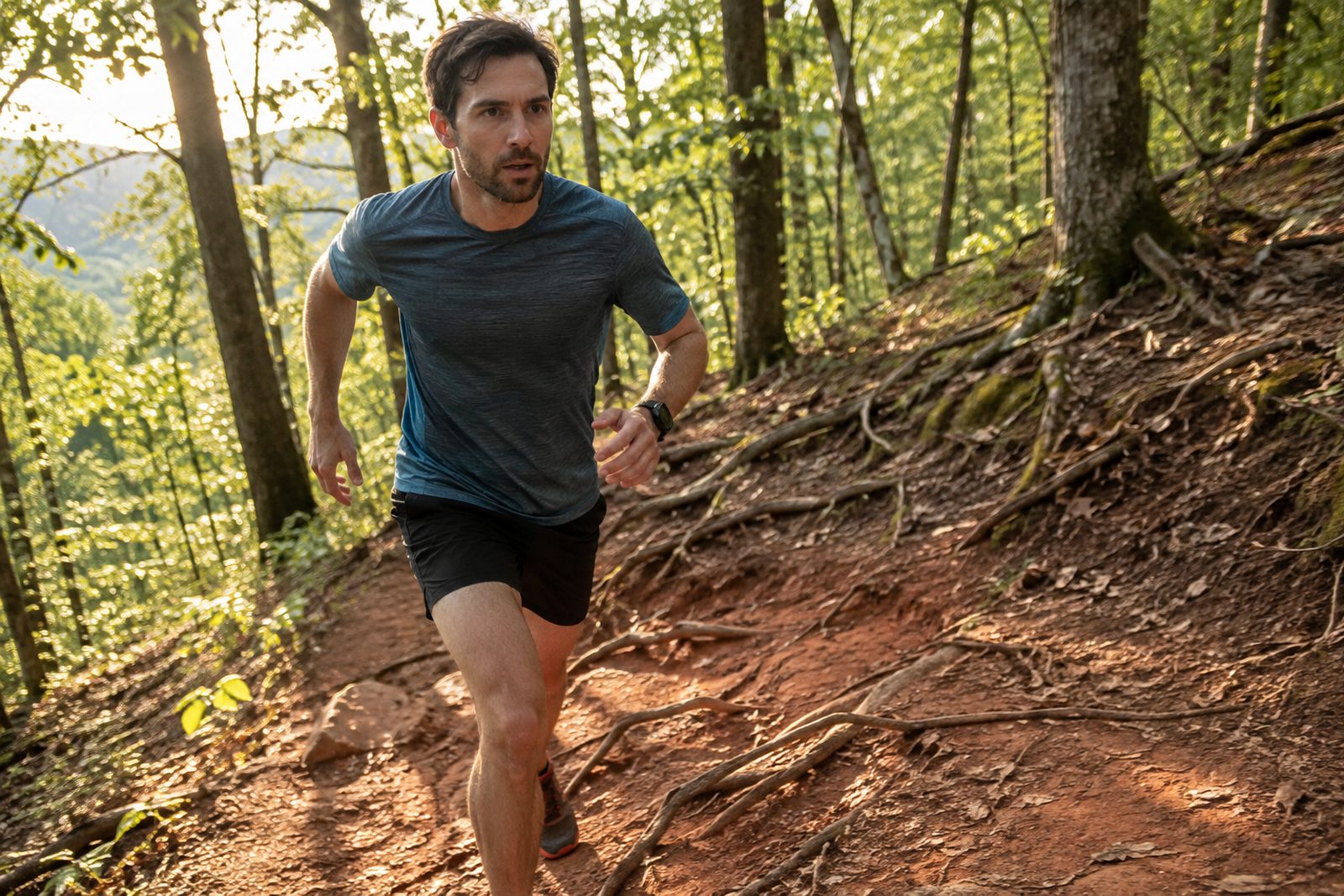
Running Kennesaw Mountain Without Wrecking Your Knees and Back
The climb up Kennesaw Mountain is a local rite of passage, and the descent is where most runners get hurt. A sports chiropractor's guide to …
Dr. Sam Ebberlein, DCRead the article
Spinal Decompression: Who It Helps, and Who It Doesn't
Non-surgical spinal decompression can be a good fit for certain disc and nerve problems. Here is how we decide whether you are a candidate, …
Dr. Becca Shaw, DCRead the articleConsultation, exam and X-rays, with a written plan you can take home — and a straight answer about whether we can help.
Book your assessment →Free tools that give you a real answer.
See your full result on screen in a few minutes. No email required.
Recovery timeline estimator
What a realistic timeline looks like for a problem like yours, what makes it longer, and the week by which the plan should change if it is not working.
Open the tool →Interactive body map
Rotate the figure, tap where it hurts, and see what is commonly behind pain in that spot.
Open the tool →Patellar Tendonitis, answered plainly
Recovery time depends heavily on how long the tendon has been degenerated. Mild cases often improve within four to six weeks of consistent care and modified loading. Chronic tendinopathy requires three to six months of structured rehabilitation to remodel collagen fibers and restore full tensile strength safely.
Complete rest often causes tendons to weaken further, so we generally recommend modified activity rather than total cessation. We help you adjust training loads, substituting high-impact jumping with controlled isometric exercises that maintain muscle tone without provoking excessive tendon pain.
Yes, conservative care is tailored precisely to your age, bone density, and functional goals. Whether you want to golf, travel, or lift grandchildren, our drug-free interventions focus on safe mechanical restoration and injury prevention rather than aggressive or forceful maneuvers.
Surgery is rarely needed for standard tendinopathy, which typically responds well to conservative remodeling and rehab. However, a complete tendon rupture or a failure to respond to six months of diligent conservative care warrants orthopedic surgical evaluation.
Schedule your evaluation in Kennesaw
Take the first step toward lasting relief with our evidence-based, drug-free approach to patellar tendonitis. Contact LeadWorks Chiropractic today to book your consultation.