
Understanding and treating it band syndrome in Kennesaw
Knee pain from a band that runs down the thigh.
Outer knee pain from repetitive friction does not have to sideline your active life. Learn how precise biomechanical evaluation and conservative care target the root causes of it band syndrome.
What is it band syndrome
You likely feel a sharp, burning ache on the outer side of your knee every time your foot strikes the ground. That discomfort comes from your iliotibial band, a thick strip of connective tissue running from your hip down to your shin. When this band rubs repeatedly against the lower thigh bone during repetitive motion, inflammation sets in.
As part of our long-term wellness approach, we look at how this friction develops over decades of movement patterns. Pain is rarely just a local tissue flaw. It is a sign that your overall biomechanics, core stability, and gait mechanics are forcing this specific tendon-like structure to absorb excessive mechanical stress.
How we diagnose your outer knee pain
Many people confuse IT band pain with meniscus tears or lateral collateral ligament sprains. During your first visit in Kennesaw, we perform specialized orthopedic tests to isolate the tissue under tension. We evaluate your pelvic stability, hip abduction strength, and ankle mobility to distinguish true friction syndrome from referred joint irritation.
We often utilize a thorough Running & Gait Analysis to observe how your body absorbs impact in real time. Pinpointing the exact mechanical breakdown lets us measure progress objectively, ensuring you receive targeted care rather than guesswork and protecting your active lifestyle.
Evidence-informed care options
Conservative care cannot magically lengthen the iliotibial band itself, because dense connective tissue does not stretch easily. Instead, our treatment focuses on reducing localized irritation and re-educating the surrounding musculature. We combine Soft Tissue & Myofascial Therapy and IASTM (Graston-Style) Instruments to break down adhesion and ease tension around the hip and thigh.
To accelerate tissue recovery without drugs, we may integrate Class IV Robotic MLS Laser Therapy to reduce cellular inflammation. For stubborn cases involving structural imbalances, Custom Foot Orthotics & Gait Support or Cupping & Decompression Cupping help restore normal lower extremity alignment and glide.
We also prescribe Active Rehab & Corrective Exercise to strengthen your gluteus medius and stabilize your pelvis. While these therapies relieve pain and improve function, they do not replace surgical intervention if a true structural tear or advanced joint pathology exists.
Realistic recovery expectations and red flags
Healing an irritated IT band takes time, typically requiring several weeks of consistent mechanical correction and home exercises. You should expect gradual, measurable improvements rather than an overnight fix. If your pain stems from an acute traumatic injury, severe meniscal damage, or an infection, chiropractic care is not appropriate.
If you experience sudden locking of the knee, severe swelling immediately after an injury, or an inability to bear any weight, you need an immediate medical evaluation. In Cobb County, patients with severe structural trauma or progressive neurological deficits are referred directly to orthopedic specialists or emergency services.
What this is treated with
Relief first, because pain makes everything else impossible. But relief alone is why conditions come back.

Running & Gait Analysis
Your running form, measured rather than described.

Soft Tissue & Myofascial Therapy
Muscle and fascia, worked by hand.

Active Rehab & Corrective Exercise
The part that decides whether it comes back.

Custom Foot Orthotics & Gait Support
Made from your foot, not selected from a wall.
Technology that guides your care


Articles that might interest you
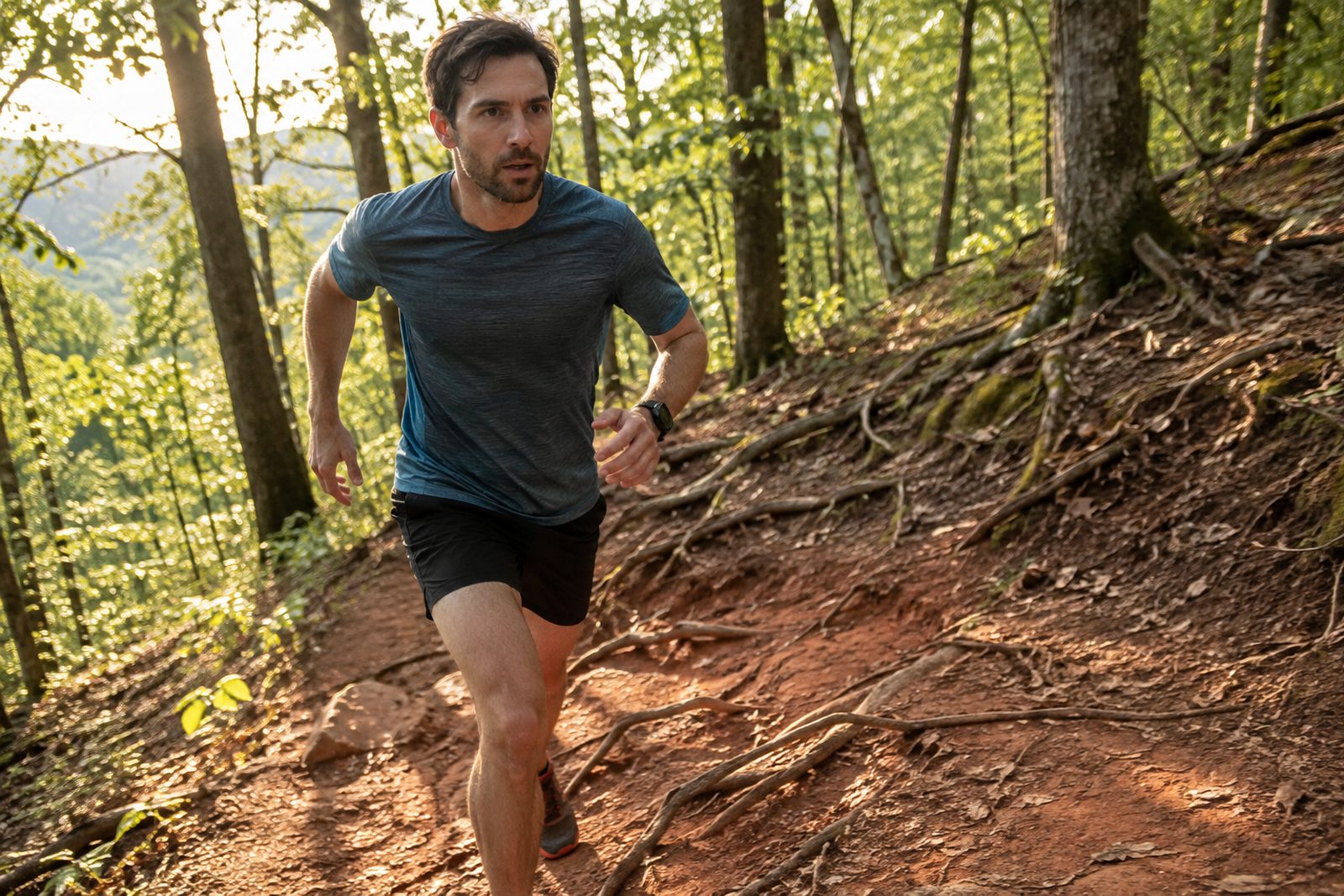
Running Kennesaw Mountain Without Wrecking Your Knees and Back
The climb up Kennesaw Mountain is a local rite of passage, and the descent is where most runners get hurt. A sports chiropractor's guide to …
Dr. Sam Ebberlein, DCRead the article
Sciatica or a Pulled Muscle? How to Tell the Difference
Pain in the buttock and down the leg can come from an irritated nerve or a strained muscle, and the right care depends on which one it is. H…
Dr. Becca Shaw, DCRead the article
Spinal Decompression: Who It Helps, and Who It Doesn't
Non-surgical spinal decompression can be a good fit for certain disc and nerve problems. Here is how we decide whether you are a candidate, …
Dr. Becca Shaw, DCRead the articleConsultation, exam and X-rays, with a written plan you can take home — and a straight answer about whether we can help.
Book your assessment →Free tools that give you a real answer.
See your full result on screen in a few minutes. No email required.
Is this a chiropractic case?
Eight questions that tell you whether this is likely helped here, needs imaging or a physician first, or needs attention today.
Open the tool →Interactive body map
Rotate the figure, tap where it hurts, and see what is commonly behind pain in that spot.
Open the tool →IT Band Syndrome, answered plainly
Stretching the iliotibial band directly is difficult because it is composed of extremely dense connective tissue. While gentle stretching of surrounding hip muscles helps, long-term relief requires addressing the root mechanical causes like hip weakness and poor gait mechanics through targeted care.
Recovery timelines vary based on how long you have experienced symptoms and your daily activity levels. Most patients notice measurable improvements within four to six weeks when combining in-office therapies with consistent home rehabilitation exercises tailored to your specific biomechanics.
Complete rest is rarely necessary, but modifying your training volume and intensity is often required during the initial healing phase. We evaluate your movement patterns in Kennesaw to determine safe activity levels that maintain your fitness without aggravating the healing tissue.
You should consult a medical physician or orthopedist immediately if you experience severe swelling, joint locking, sudden instability, or an inability to bear weight after a trauma. These signs often point to acute structural damage requiring specialized medical intervention or surgical imaging.
Ready to address your outer knee pain?
Schedule an evaluation at LeadWorks Chiropractic in Kennesaw to uncover the mechanical drivers behind your discomfort and start your path toward lasting relief.