
Custom foot orthotics support for patients in Kennesaw
Made from your foot, not selected from a wall.
Precision-engineered foot support designed from your unique anatomical scan to improve stability, reduce joint strain, and keep you active.
Made from your foot, not selected from a wall
When you need custom foot orthotics support, generic inserts off a retail shelf rarely solve the root cause of your discomfort. At LeadWorks Chiropractic in Kennesaw, we build devices tailored to your exact weight distribution, structural alignment, and movement patterns. This service provides medical-grade biomechanical control rather than temporary cushioning.
This is not a magic fix for structural disease, nor does it replace active rehabilitation. Instead, it acts as a stabilizing foundation. By correcting faulty foot mechanics, we help reduce abnormal strain moving up through your ankles, knees, hips, and lower back during daily movement.
Who this service suits and who it does not
This care suits active adults in their forties through sixties wanting to maintain mobility without surgery, as well as older adults aiming to stay active and lift grandchildren safely. It also suits anyone dealing with chronic lower limb fatigue who values measurable evidence. We often pair this with Digital Posture Analysis to assess whole-body load.
This service does not suit patients seeking immediate overnight pain elimination without lifestyle changes, or those with severe acute fractures requiring immediate surgical intervention. If your gait issues stem from acute neurological trauma rather than mechanical misalignment, we will refer you appropriately.
What a realistic course of care involves
Your care begins with a thorough evaluation, often incorporating Foot & Gait Pressure Scanning to capture precise data. We map your weight distribution before casting your feet. Once your devices arrive, the process moves into an adaptation phase where you break them in gradually over two to three weeks.
Phase one involves wearing the inserts for short periods daily to let your muscles adjust. Phase two integrates them into your regular activities, such as walking, working, or exercising. Follow-up visits check your physical response and make minor adjustments if pressure points arise.
Measuring progress and handling roadblocks
We measure progress through objective markers, including symptom tracking, gait reassessment, and overall endurance during daily tasks. You should notice a gradual reduction in fatigue and localized discomfort within four to six weeks of consistent use.
If progress stalls or new discomfort emerges, we reassess your footwear, movement patterns, and spinal alignment. We may integrate complementary therapies like Shockwave Therapy or Arch Pain & Fallen Arches protocols if localized tissue irritation persists. If the devices fail to provide relief after targeted adjustments, we re-evaluate your diagnosis entirely.
What custom foot orthotics & gait support is actually for
Spine & Back


Lower Extremity


How it is delivered

Class IV Robotic MLS Laser Therapy
Two wavelengths, and enough power to reach a hip.

Corrective Spinal Traction & Orthotics
Remodeling a curve takes time and a specific load.

Cupping & Decompression Cupping
Lifting tissue rather than pressing it.

Digital Posture Analysis
Posture, measured in degrees and millimeters.

Dynamic Compression Therapy
Rhythmic pressure that moves what swelling leaves behind.

Electrical Muscle Stimulation & Interferential Current
Interrupting a pain signal and a muscle spasm.

Foot & Gait Pressure Scanning
Every step you take, mapped as pressure.

IASTM (Graston-Style) Instruments
A steel edge finding what a thumb cannot.

PiezoWave Myofascial Acoustic Compression Therapy
Acoustic pressure, aimed at one square centimeter.

Pulsed Electromagnetic Field (PEMF) Therapy
A pulsed field, and cells that respond to it.

Shockwave Therapy
Deliberate controlled irritation that restarts healing.

Vestibular & Balance Rehabilitation Technology
Balance is a trainable system, not a fixed trait.

Whole-Body Vibration Therapy
Vibration recruits muscle you cannot recruit on purpose.
Articles that might interest you

Sciatica or a Pulled Muscle? How to Tell the Difference
Pain in the buttock and down the leg can come from an irritated nerve or a strained muscle, and the right care depends on which one it is. H…
Dr. Becca Shaw, DCRead the article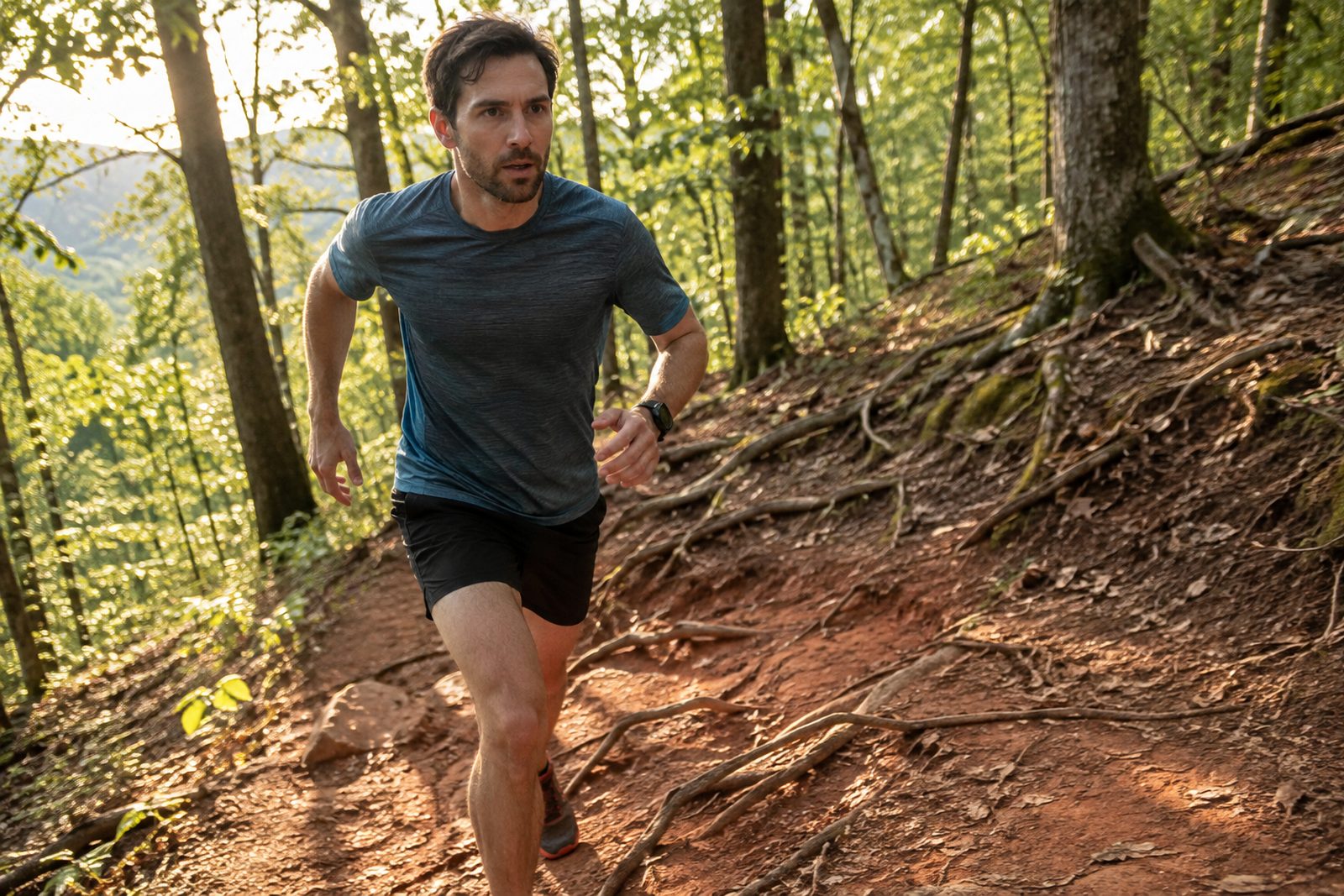
Running Kennesaw Mountain Without Wrecking Your Knees and Back
The climb up Kennesaw Mountain is a local rite of passage, and the descent is where most runners get hurt. A sports chiropractor's guide to …
Dr. Sam Ebberlein, DCRead the article
Spinal Decompression: Who It Helps, and Who It Doesn't
Non-surgical spinal decompression can be a good fit for certain disc and nerve problems. Here is how we decide whether you are a candidate, …
Dr. Becca Shaw, DCRead the articleConsultation, exam and X-rays, with a written plan you can take home — and a straight answer about whether we can help.
Book your assessment →Find out whether this is right for you first.
Two to four minutes each, with your full result on screen at the end.
Golf, tennis and runner movement screens
Five self-tests for golf, racquet sports or running — and for anything you fail, what it costs you and what your body does instead.
Open the tool →60-second posture self-check
Six things you can see in a mirror or a photo, and what each one usually means.
Open the tool →Interactive body map
Rotate the figure, tap where it hurts, and see what is commonly behind pain in that spot.
Open the tool →Before you book, the honest answers
High-quality custom devices typically last between two and five years depending on your body weight, activity level, and daily usage. The outer top covers may show normal wear earlier and can often be refurbished by our clinic without replacing the entire supportive shell.
Because custom devices are molded to fit specific biomechanical parameters and shoe volumes, swapping them between dress shoes, athletic sneakers, and work boots rarely works well. We help you select primary footwear profiles that match your most frequent daily activities.
When properly designed, supportive devices do not weaken your foot muscles. Instead, they optimize joint alignment so your intrinsic muscles contract more efficiently. We often combine orthotic support with active rehabilitation to maintain optimal strength and joint stability.
You do not need a referral to schedule an evaluation at LeadWorks Chiropractic. We perform comprehensive biomechanical assessments directly in our Kennesaw office to determine whether structural foot support is appropriate for your specific movement goals and daily challenges.
Take the next step toward better movement
Schedule an evaluation at LeadWorks Chiropractic to find out how custom foot orthotics support your long-term mobility and structural health.