
How vestibular technology supports balance recovery in Kennesaw
Balance is a trainable system, not a fixed trait.
Balance is a trainable system, not a fixed trait. As you age or recover from an injury, your nervous system can lose its calibration. At LeadWorks Chiropractic, we use specialized tools alongside our lifetime wellness care to help you retrain your visual, vestibular, and proprioceptive pathways safely.
Understanding vestibular technology and sensory feedback
Vestibular technology uses computerized movement platforms and visual tracking displays to measure how your body responds to motion. When you step onto the equipment, sensors track tiny shifts in your center of pressure and postural sway. It feels like standing on a stable or moving surface while following visual targets on a screen. The system does not force your body into position; instead, it records your natural imbalances in real time.
This precise feedback helps your clinician identify which part of your balance network needs attention. Your brain relies on input from your inner ear, your eyes, and the joints in your feet. When one of these systems falters, stability declines. The technology quantifies these deficits so we can track objective changes over time, supporting programs like Senior Mobility & Independence or Youth Athlete Development.
What this tool treats and what it does not replace
We use this equipment primarily for patients managing vertigo and dizziness, balance problems and fall risk, or recovery through our Concussion & Post-Concussion Syndrome protocols. It provides targeted metrics that guide our Chiropractic Neurology / Functional Neurology assessments. However, technology is never a substitute for thorough clinical examination, orthopedic testing, or hands-on care.
Equipment cannot diagnose a condition on its own, nor does it replace manual adjustments, Corrective Chiropractic Care, or Upper Cervical Care. It is simply an objective measuring and training instrument. Real clinical progress depends on expert clinical reasoning, individualized care plans, and active patient participation within our Kennesaw facility.
What the clinical evidence supports and limits
Clinical research strongly supports sensorimotor retraining and habituation exercises for chronic dizziness and peripheral vestibular dysfunctions. Controlled trials show that objective balance training reduces fall rates in older adults and accelerates recovery after mild traumatic brain injury. Data confirms that targeted vestibular challenges stimulate neuroplastic adaptation in the central nervous system.
At the same time, evidence remains thin regarding generalized longevity claims or passive improvements without active physical effort. Technology cannot passively cure structural inner-ear pathology or erase degenerative joint disease. The research shows that improvement requires active participation. Our approach aligns with long-term wellness by emphasizing long-term functional habits over quick fixes.
Session length, typical course, and physical integration
A typical session involving vestibular equipment lasts between ten and twenty minutes. You remain clothed and fully supported during testing and training phases. Depending on your baseline stability and specific goals, a standard course of care spans six to twelve weeks, with sessions scheduled once or twice weekly.
We frequently pair this technology with Active Rehab & Corrective Exercise, Post-Surgical & Post-Injury Rehabilitation, and Custom Foot Orthotics & Gait Support. This combination ensures that the improvements you make on the balance platform translate directly into safer walking, driving, golfing, and lifting grandchildren around Kennesaw and Cobb County.
Where this equipment does its work

Lifetime Wellness Care
Care planned for the decades, not the episode.

Active Rehab & Corrective Exercise
The part that decides whether it comes back.

Chiropractic Neurology / Functional Neurology
When the problem is how the brain reads the body.

Corrective Chiropractic Care
Restoring movement to joints that stopped moving.

Custom Foot Orthotics & Gait Support
Made from your foot, not selected from a wall.

Post-Surgical & Post-Injury Rehabilitation
After the operation, or after the injury.
Senior Mobility & Longevity Care
Mobility is what independence is made of.

Upper Cervical Care
The two joints that carry your skull.

Youth Athlete Development
Growing bodies, and coaches who want them playing.

Cranial Adjusting & Craniopathy
The skull is not one solid piece.
What we point it at
Head, Neck & Jaw


Neurological & Stress

Wellness & Healthy Aging

Articles that might interest you

Sciatica or a Pulled Muscle? How to Tell the Difference
Pain in the buttock and down the leg can come from an irritated nerve or a strained muscle, and the right care depends on which one it is. H…
Dr. Becca Shaw, DCRead the article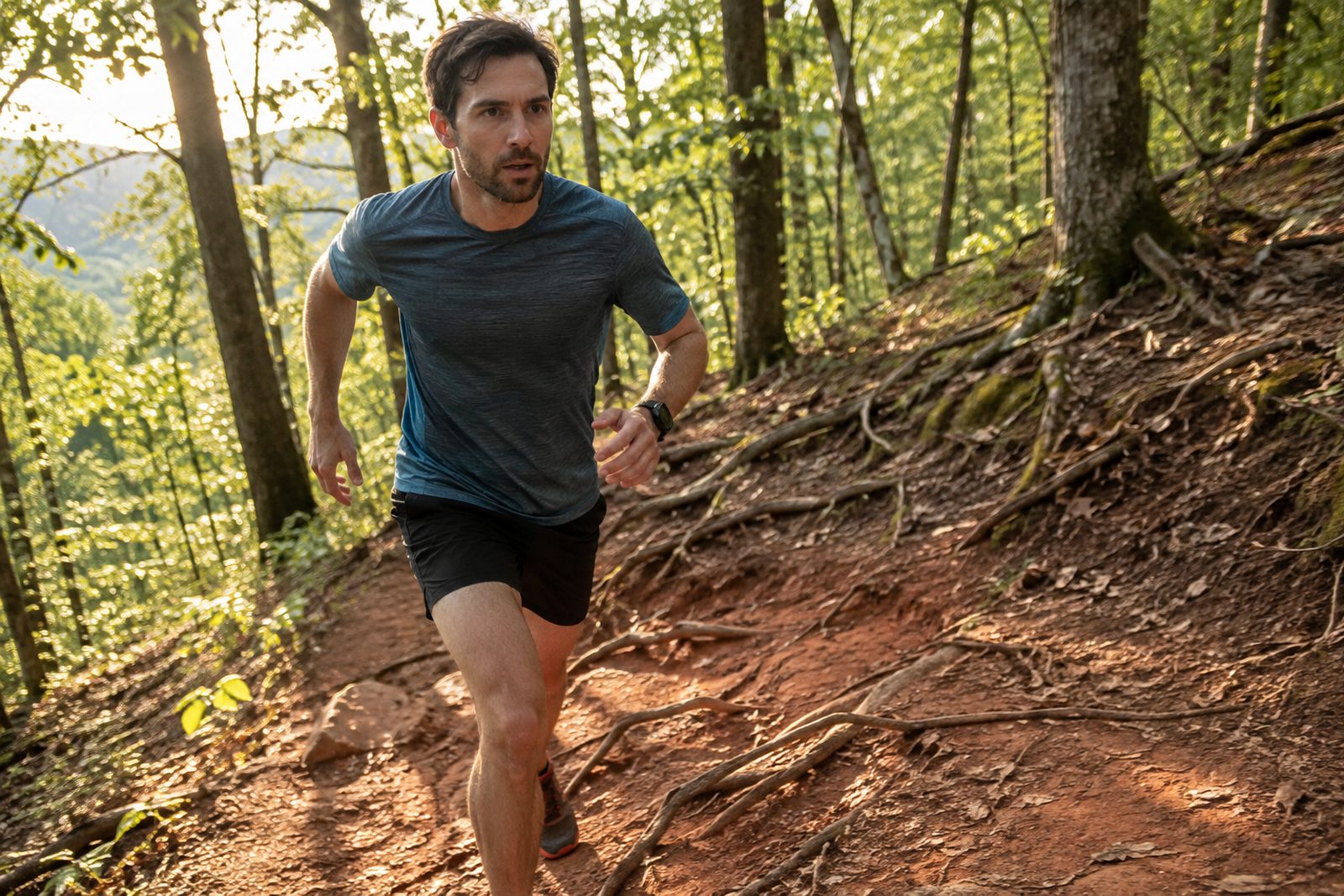
Running Kennesaw Mountain Without Wrecking Your Knees and Back
The climb up Kennesaw Mountain is a local rite of passage, and the descent is where most runners get hurt. A sports chiropractor's guide to …
Dr. Sam Ebberlein, DCRead the article
Spinal Decompression: Who It Helps, and Who It Doesn't
Non-surgical spinal decompression can be a good fit for certain disc and nerve problems. Here is how we decide whether you are a candidate, …
Dr. Becca Shaw, DCRead the articleAnswer that before you come in.
Equipment is only useful for the right problem. Start by working out which problem you have.
Consultation, exam and X-rays, with a written plan you can take home — and a straight answer about whether we can help.
Book your assessment →What people want to know about it
No, the testing is entirely non-invasive and painless. You may experience mild, temporary motion sensations if your balance system is challenged, but your clinician remains right beside you to ensure your comfort and safety throughout the entire procedure.
This equipment provides precise digital measurements of your postural sway and visual reaction times. While traditional exercises are valuable, digital metrics allow us to track small, objective improvements that standard observation might miss during your care plan.
Absolutely not. The technology is strictly a measurement and retraining tool for sensory integration. It complements, but never replaces, hands-on chiropractic care, spinal adjustments, and personalized neurological evaluations designed to address the root cause of your symptoms.
Timelines vary based on your age, history, and specific condition. Many patients report increased stability and reduced dizziness within four to six weeks of consistent training, especially when combined with our broader rehabilitation and lifestyle programs.
Schedule your balance and vestibular evaluation in Kennesaw
Take an objective look at your stability with our advanced assessment tools. Contact LeadWorks Chiropractic today to start your personalized, drug-free care plan.