
How IASTM instruments support recovery at our Kennesaw clinic
A steel edge finding what a thumb cannot.
A steel edge finding what a thumb cannot.
A steel edge finding what a thumb cannot
Human hands are remarkable diagnostic tools, yet dense connective tissue can hide subtle micro-adhesions that escape even experienced fingertips. A steel edge acts as an amplifier, transmitting subtle texture changes from beneath the skin straight through the tool to the clinician's hand. At LeadWorks Chiropractic, we use IASTM instruments to scan and address soft-tissue restrictions that limit your movement during daily life in Kennesaw.
This tool-assisted approach does not replace manual palpation or thorough clinical examination. Instead, it serves as an extension of our hands-on evaluation. When paired with Corrective Chiropractic Care or Active Rehab & Corrective Exercise, it helps us identify areas of fibrotic change that require targeted clinical intervention.
What the treatment feels like and how it works
During a session, the clinician glides the contoured stainless-steel edge across restricted muscle fibers and fascial planes. The instrument creates micro-vibrations, allowing the clinician to feel structural density changes beneath the skin. You may feel a mild scraping or tugging sensation, occasionally accompanied by mild warmth as local blood flow increases. Temporary, light pinpoint bruising can occur, though heavy bruising is never our goal.
We use these tools to address chronic scar tissue, old athletic injuries, and stubborn movement restrictions. However, they are never a standalone cure or a substitute for active patient participation. They simply prepare the tissue so you can move better during your recovery process.
What clinical research supports and where evidence remains mixed
Clinical studies suggest that tool-assisted soft-tissue mobilization can temporarily increase local blood flow, improve range of motion, and alter pain perception through neurological mechanisms. For active adults and former athletes looking to maintain mobility for golf, travel, or lifting grandchildren, these outcomes are genuinely useful.
At the same time, the scientific literature remains mixed regarding whether these techniques permanently break down deep scar tissue on a microscopic level. Some claims made in broader wellness spaces outpace current high-quality data. We remain transparent about these boundaries, ensuring your care plan relies on realistic expectations and verifiable mechanical improvements rather than unproven promises.
Session structure and your typical care timeline
A typical session involving these instruments lasts between five and ten minutes within a broader appointment. The total course of care generally spans six to twelve visits, depending on whether you are managing an acute strain or a long-standing repetitive stress injury from work or sport.
To secure long-term gains, we integrate this soft-tissue work with other clinical services. Depending on your presentation, we may combine your visits with Dry Needling, Massage Therapy, or Running & Gait Analysis. If your restrictions stem from foot mechanics, we might evaluate you for Custom Foot Orthotics & Gait Support. For post-surgical needs, we coordinate closely with Post-Surgical & Post-Injury Rehabilitation protocols.
Contraindications and safety guidelines for treatment
While effective for many patients, tool-assisted therapy is not appropriate for everyone. We carefully screen your health history during your initial consultation at our Kennesaw location to protect your safety, rule out systemic issues, and avoid any adverse reactions during your care.
If you have specific medical conditions, we will redirect you toward alternative options such as Extremity Adjusting, Kinesiology Taping, or our Recovery & Regeneration Program. For more complex clinical presentations, we may also coordinate with our Regenerative Therapies (PRP / Cell-Based) or Peripheral Neuropathy Program partners.
Where this equipment does its work

Active Rehab & Corrective Exercise
The part that decides whether it comes back.

Corrective Chiropractic Care
Restoring movement to joints that stopped moving.

Custom Foot Orthotics & Gait Support
Made from your foot, not selected from a wall.

DOT, Sports & Work Fitness Physicals
Cleared, certified, and done the same day.

Dry Needling
A thin needle into the knot, and it releases.

Extremity Adjusting
Shoulders, knees, ankles and wrists are joints too.

Kinesiology Taping
Support that lets you keep moving while it heals.

Massage Therapy
Therapeutic, and part of a plan.

Peripheral Neuropathy Program
One of the few real options for nerve pain in the feet.

Post-Surgical & Post-Injury Rehabilitation
After the operation, or after the injury.

Prenatal & Postpartum Chiropractic
A pelvis that has to open, and a spine carrying more.

Recovery & Regeneration Program
The training session you are not doing.

Regenerative Therapies (PRP / Cell-Based)
Promising, honestly framed, and not for everyone.

Running & Gait Analysis
Your running form, measured rather than described.

Scar Tissue & Adhesion Release
Breaking down what healing laid down badly.

Soft Tissue & Myofascial Therapy
Muscle and fascia, worked by hand.

Sports Chiropractic & Athletic Performance
Built for the recreational athlete who is not done.

Stress, Sleep & Nervous System Regulation
You cannot heal in the state you are living in.

Structural Correction & Posture Rehabilitation
Changing the structure, not just easing the symptom.

Workers' Compensation Injury Care
Back to work without going back too early.

Youth Athlete Development
Growing bodies, and coaches who want them playing.

Cranial Adjusting & Craniopathy
The skull is not one solid piece.

Trigenics® Myoneural Medicine
Resistance while you move, not a passive stretch.
What we point it at
Spine & Back


Nerve & Disc


Head, Neck & Jaw

Upper Extremity


Articles that might interest you

Sciatica or a Pulled Muscle? How to Tell the Difference
Pain in the buttock and down the leg can come from an irritated nerve or a strained muscle, and the right care depends on which one it is. H…
Dr. Becca Shaw, DCRead the article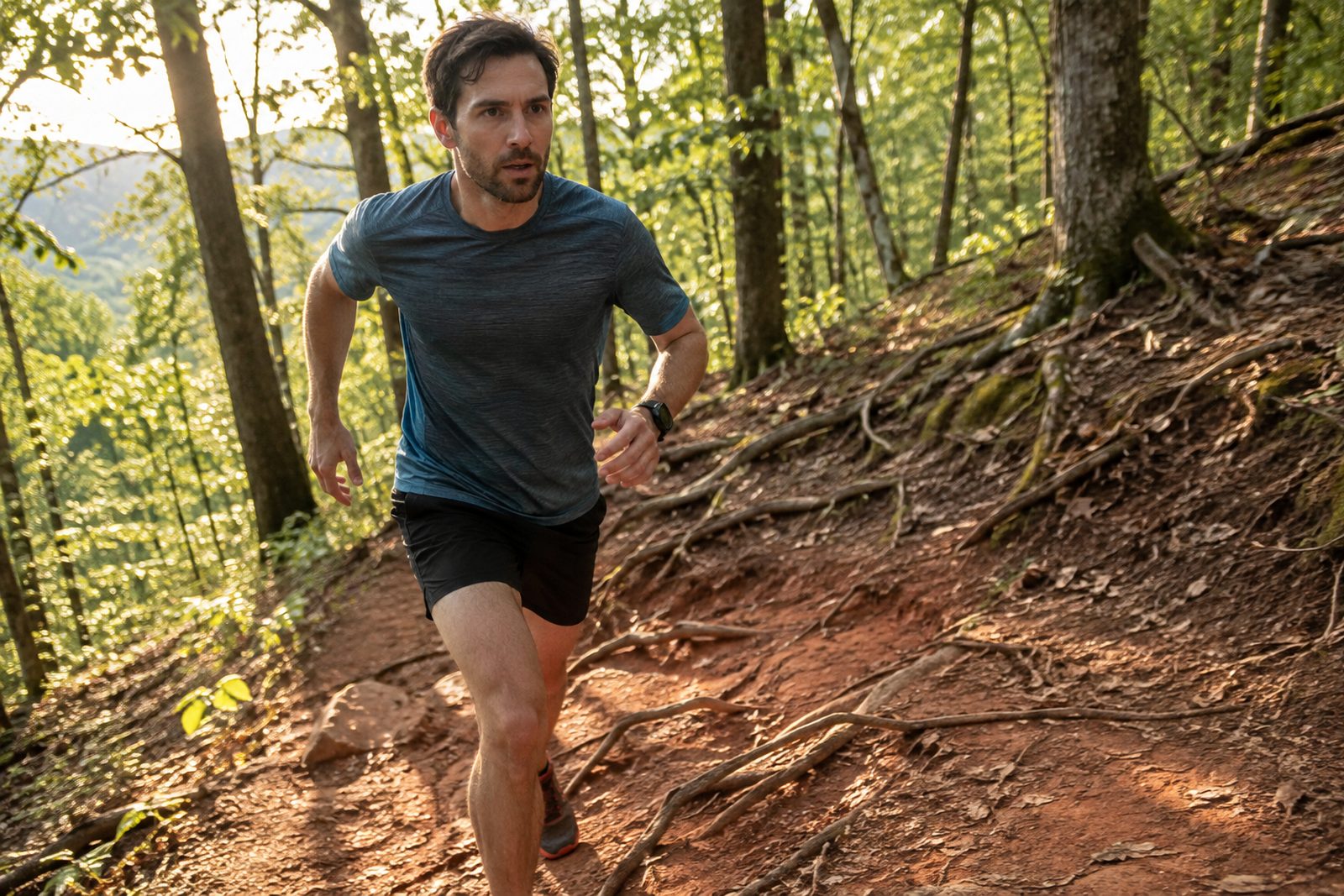
Running Kennesaw Mountain Without Wrecking Your Knees and Back
The climb up Kennesaw Mountain is a local rite of passage, and the descent is where most runners get hurt. A sports chiropractor's guide to …
Dr. Sam Ebberlein, DCRead the article
Spinal Decompression: Who It Helps, and Who It Doesn't
Non-surgical spinal decompression can be a good fit for certain disc and nerve problems. Here is how we decide whether you are a candidate, …
Dr. Becca Shaw, DCRead the articleAnswer that before you come in.
Equipment is only useful for the right problem. Start by working out which problem you have.
Consultation, exam and X-rays, with a written plan you can take home — and a straight answer about whether we can help.
Book your assessment →What people want to know about it
You may feel mild discomfort, tugging, or a scraping sensation as the metal edge moves over restricted tissue. Most patients describe it as a deep, productive pressure rather than sharp pain. Minor pinpoint bruising can happen, but we always adjust pressure to match your personal comfort threshold.
No. These tools are designed exclusively for soft-tissue mobilization of muscles, tendons, and fascia. They do not replace spinal adjustments or hands-on joint mechanics evaluation. We use them alongside Corrective Chiropractic Care to address both joint and muscular components of your pain.
Many patients notice an immediate, temporary improvement in range of motion right after a session because the nervous system and local tissues have relaxed. Lasting structural changes require a cumulative series of visits combined with active movement exercises and proper daily habits.
Yes. We do not use these instruments over open wounds, active infections, deep vein thrombosis, malignant tumors, or directly over a pregnant abdomen. Patients taking blood thinners or those with severe vascular disease also require modified care or alternative treatment methods entirely.
Schedule your evaluation in Kennesaw
Find out if soft-tissue support is right for your movement goals. Contact LeadWorks Chiropractic today to book your initial consultation.